Operator realism
Better downside analysis
AI researcher · Founder-operator · Investor
I connect technical shifts to real-world business and investing outcomes—drawing on 25+ years of building companies, studying technology and investing across markets.
My edge is the overlap: founder-level operating experience, daily technical exploration and the patience to build high-conviction views before they become consensus.
Better downside analysis
Signal over demos
Compounding over cycles
Fewer, better ideas
Deeply engaged with startups and AI since 2019—experimenting, building and learning every day.
Exited a previous services company to focus fully on startups and AI-first development.
Immersed in founder culture through Y Combinator Startup School and direct interaction with technology founders.
Began exploring artificial intelligence in early 2021—before the public release of ChatGPT.
Spend 8+ hours daily studying model progress, industry news, technical blogs and leading lab documentation.
Closely track the operators shaping the field: Jensen Huang, Sam Altman, Demis Hassabis, Dario Amodei and Elon Musk.
Synthesize signals from deep-technology conversations, research and firsthand product experimentation.
Selected investments across public equities, private markets and digital assets. Outcomes are indicative multiples from the original portfolio record.
The full-stack compute moat
20×Open-source AI and ad distribution
10×Energy bottleneck for AI clusters
10×Search distribution and DeepMind talent
5×AWS infrastructure and compute scale
4×Real-world robotics and FSD inference
5×AI-native developer cloud
9×Global connectivity and launch dominance
3×OpenAI, Anthropic, xAI and Databricks exposure
2×Brand scalability in affordable luxury
75×Premiumization of Indian consumer habits
5×Local logistics network effect
5×Financial inclusion through micro-savings
3×Operational excellence in low-cost aviation
3×Checkout friction reduction for D2C
2×Sovereign asset and digital gold
15×Global programmable finance layer
15×Privacy infrastructure layer
5×These portfolios are offered as actively managed portfolio services through The Fynprint. Get in touch with The Fynprint to schedule a call and explore the right fit.
Ongoing conversations with Neil Borate and essays for The Fynprint—connecting AI progress, ecosystem economics and portfolio construction.
Explore The Fynprint ↗In conversation with Neil Borate · The Fynprint
 Oct 2026
Podcast · The Fynprint
A conversation with Neil Borate on Anthropic’s valuation, AI agents and the future of AI investing.
 Sep 2026
Podcast · The Fynprint
A conversation with Neil Borate on NVIDIA’s growth, the AI boom, emerging competition and investment risks.
 Aug 2026
Podcast · The Fynprint
A global scan of the AI trade—from China and South Korea to SpaceX and the wider technology ecosystem.
 Aug 2026
Podcast · The Fynprint
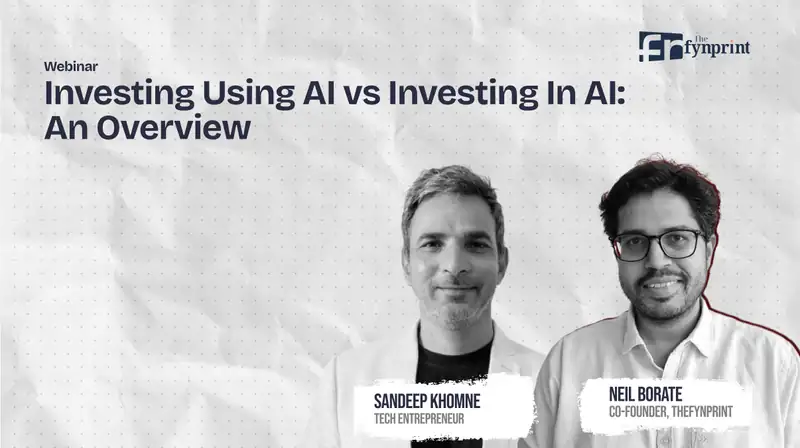
A practical distinction between using AI tools to make investment decisions and investing in the companies building the AI economy.
 Jul 2026
Podcast · The Fynprint
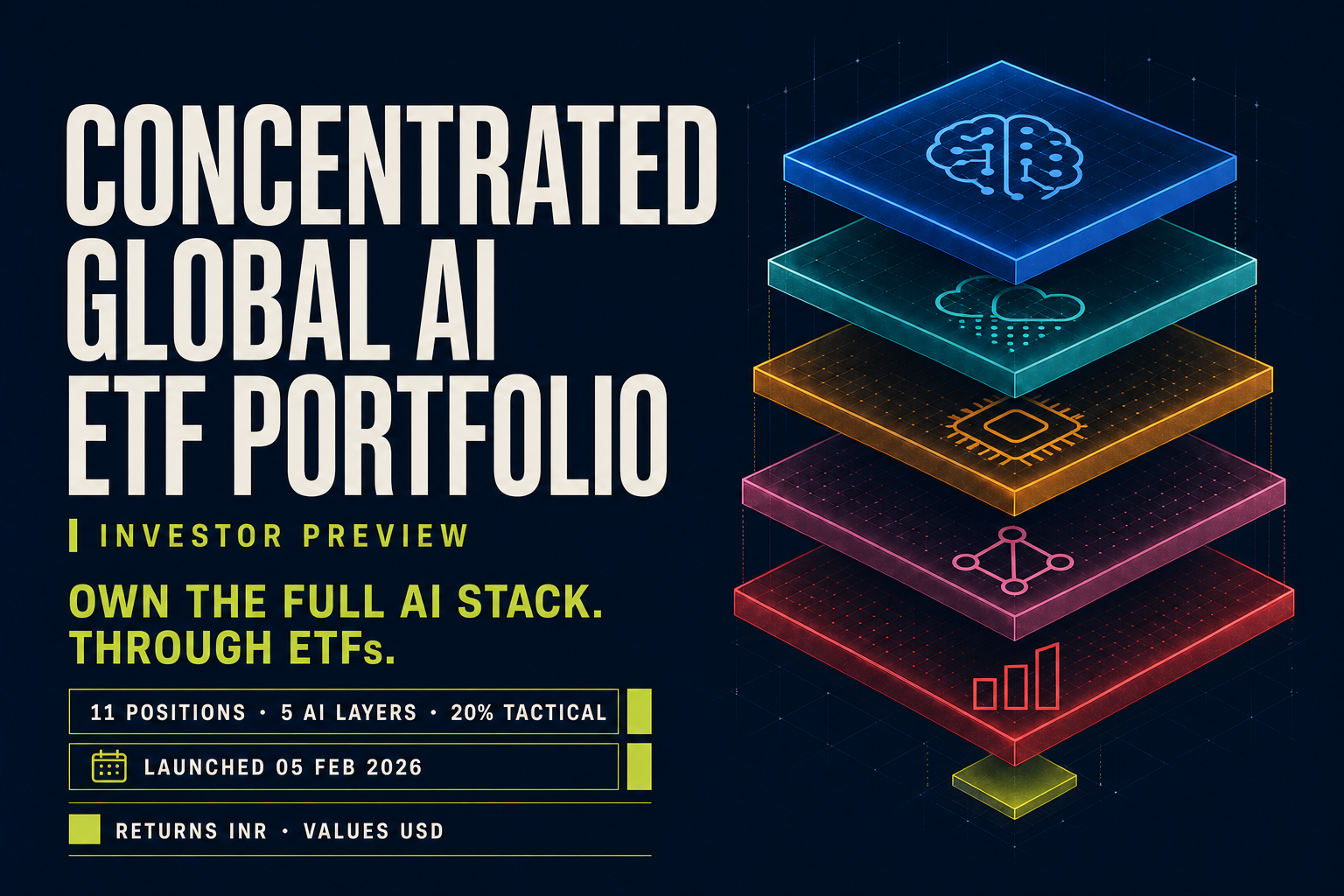
SpaceX, AI investing and a five-layer portfolio framework for participating in the global AI buildout.
 Apr 2026
Podcast · The Fynprint
A candid discussion of concentration, conviction and why three technology holdings became the core of the portfolio.
Selected essays · Updated as new work is published
Examining Anthropic’s proposed valuation and the growth expectations behind a 31× revenue multiple.
A closer look at NVIDIA’s revenue, forward guidance and the challengers competing for AI compute spending.
A portfolio construction framework using diversified ETF baskets across the five layers of the AI economy.
How China’s open-weight labs turned export constraints into a competing AI ecosystem built on downloadable models and aggressive pricing.
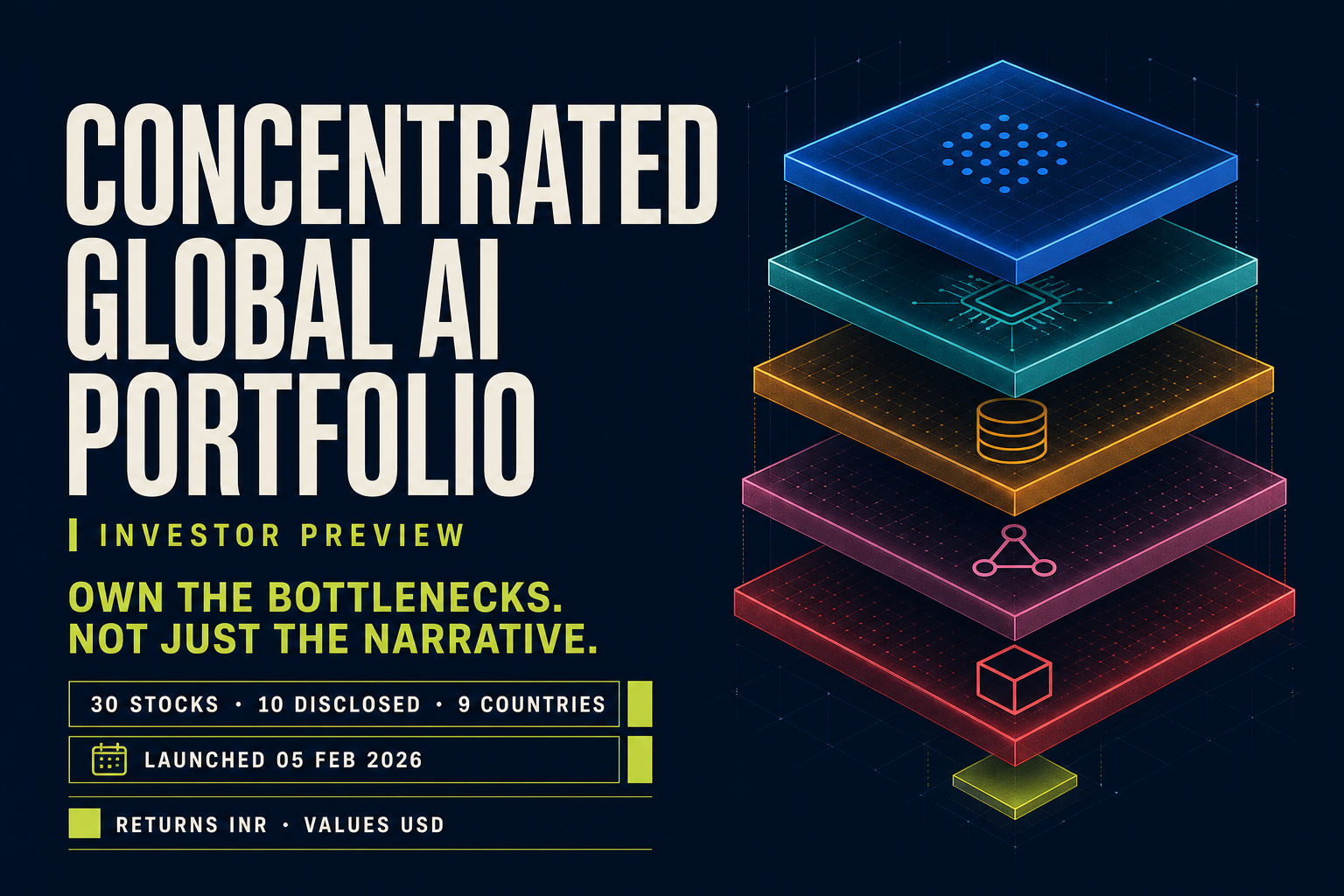
A bottleneck-led map of the AI stack—from power and chips to infrastructure, models and applications.
Ideas shared publicly before the market narrative caught up.
“Applied for OpenAI Fund with a product to automate instructional design using GPT-3.”
LLM workflow automation—one year before ChatGPT.
“GPT-3 is good enough for cheat-proof tests and auto-grading.”
Anticipating the reset of education frameworks.
“‘Reward is enough’ in the context of AGI and intelligence is a mind-blowing idea.”
Early alignment with reinforcement learning as a driver of intelligent behavior.
“Text, image, video and audio will blow it to insane levels. Imagine an AI-first movie.”
Early identification of the cross-modality shift.
“GPT-3 and DALL·E 2 feel like an iPhone or Internet-scale event.”
AI as the decade’s primary technological driver.
“Building with GPT-3 APIs and Codex without formally learning AI, ML or Python. Endless possibilities.”
Validating coding through natural language before the shift became mainstream.
“The AI breakthrough is already here. GPT-3 could be a Google killer—but Google has data and DeepMind.”
An early view of the tension between innovation and distribution moats.
“ChatGPT has all the signs of becoming a huge platform across fiction, code, travel and search.”
Recognizing the horizontal nature of LLMs immediately after launch.
“OpenAI above $100B, multimodal AI, and new highs for Tesla and SpaceX.”
Aggressive valuation targets rooted in AI-first growth models.
“The nature of software—especially AI—makes it easy for big technology companies to kill startups overnight.”
The thin-wrapper problem and platform risk for venture-backed software.
“Integrating generative AI into two billion daily users will make Google grow exponentially.”
A counter-narrative to the ‘Google is dying’ thesis.
“Autonomous robots are a wild, high-impact field. Most people are missing it like they missed GenAI.”
Real-world robotics as the next compute frontier.
“AI is the tool today. Future versions will achieve what existing tools do—and replace them.”
The thesis of AI cannibalizing software vertical by vertical.
“AI is both hardware and software. Content will 1000×, driving exponential demand for compute.”
The content-explosion thesis for GPUs, servers and cloud.
“The safest AI exposure starts with hardware, then model leaders; pure software is trickier.”
A strategic asset-allocation framework for the AI decade.
“Founder-led technology companies win through technical depth, obsessive control and contrarian patience.”
A synthesis of operating principles from years of studying Elon Musk and Jensen Huang.
Two operating chapters. One continuous curiosity about how technology creates leverage.
Asterial Technologies LLP
AI products, research & venture exploration
Exult · Bootstrapped & exited
E-learning & enterprise services
Public equities, private markets, secular trend investing, business models and durable competitive moats.
AI systems and infrastructure, robotics, biotech, space tech and fintech—tracking technical progress, adoption curves and investable opportunities.
University of Pune, India · 1999
09 / Open to thoughtful conversations